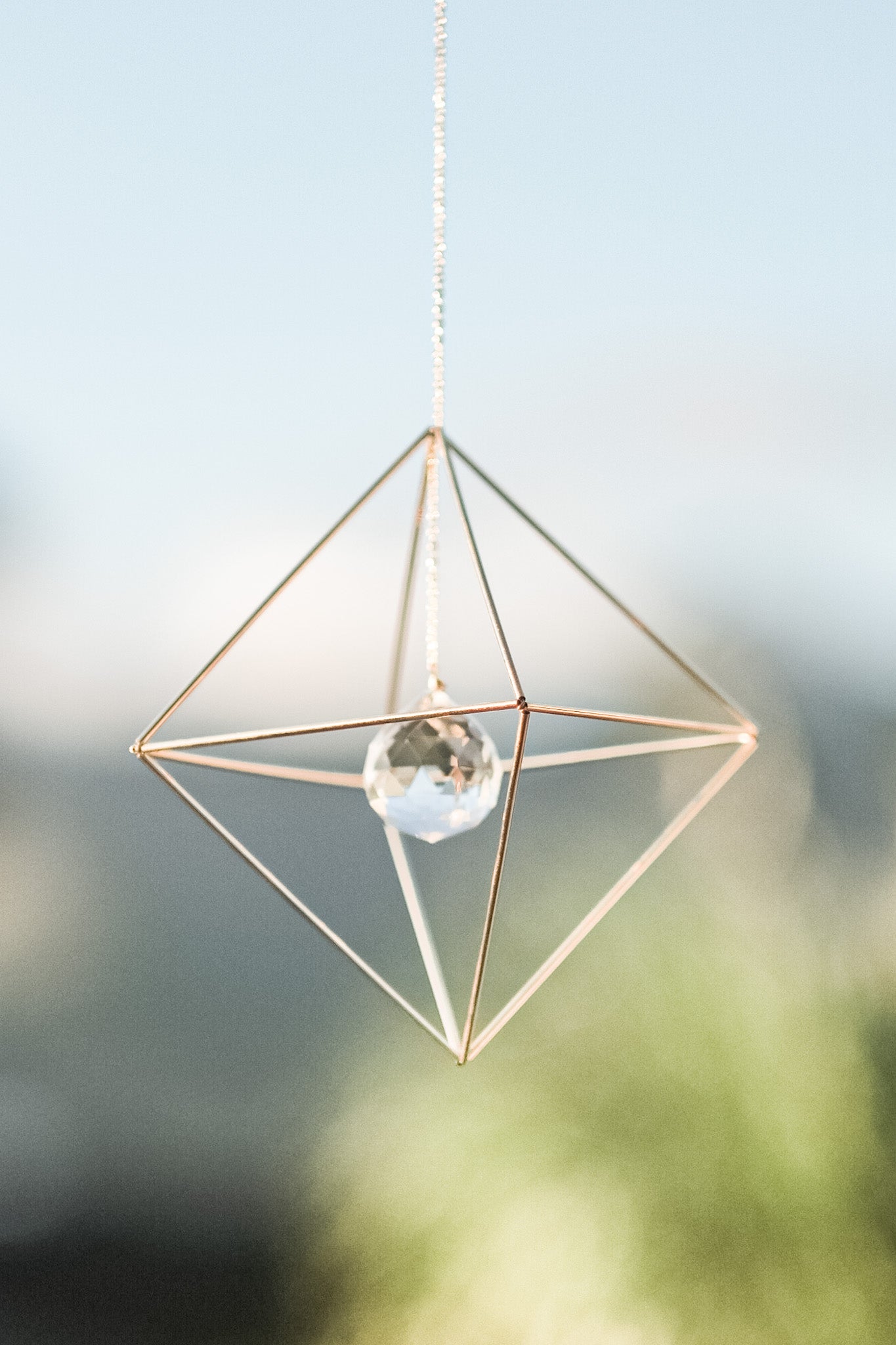
Octahedron
Octahedron
Couldn't load pickup availability
A center that can move
The octahedron brings attention to balance without stillness.
It can be especially meaningful when different parts of life are asking for space at the same time, when emotions and thoughts are moving quickly, or when you need to respond without letting one moment reorganize everything.
The octahedron offers a simple question:
Can different movements exist without competing for the center?
Balance does not always mean equal amounts.
Sometimes it means allowing each direction to exist without letting any one of them take over the whole structure.
How to use it
Place the octahedron somewhere you pause, breathe, reflect, or move between different activities.
You can use it as a visual reference when your attention feels divided or when a strong reaction begins to occupy more space than the situation requires.
Look at the form and consider:
- What is moving right now?
- What is asking for attention?
- What belongs to this moment?
- What does not need to take over the entire system?
The octahedron does not ask you to stop moving.
It offers a way to move without losing the center.
Best for
Balance
Clarity
Emotional regulation
Transitions
Breathwork
Meditation spaces
Creative studios
Shared spaces
Places of movement and reflection
Share